
// Practical Shooting
ARTICLE ID: SHO-GUI-WHA
What is the 36 Yard Zero?
A guide to the 36-yard zero concept and how trajectory choices affect practical rifle holds at different ranges.
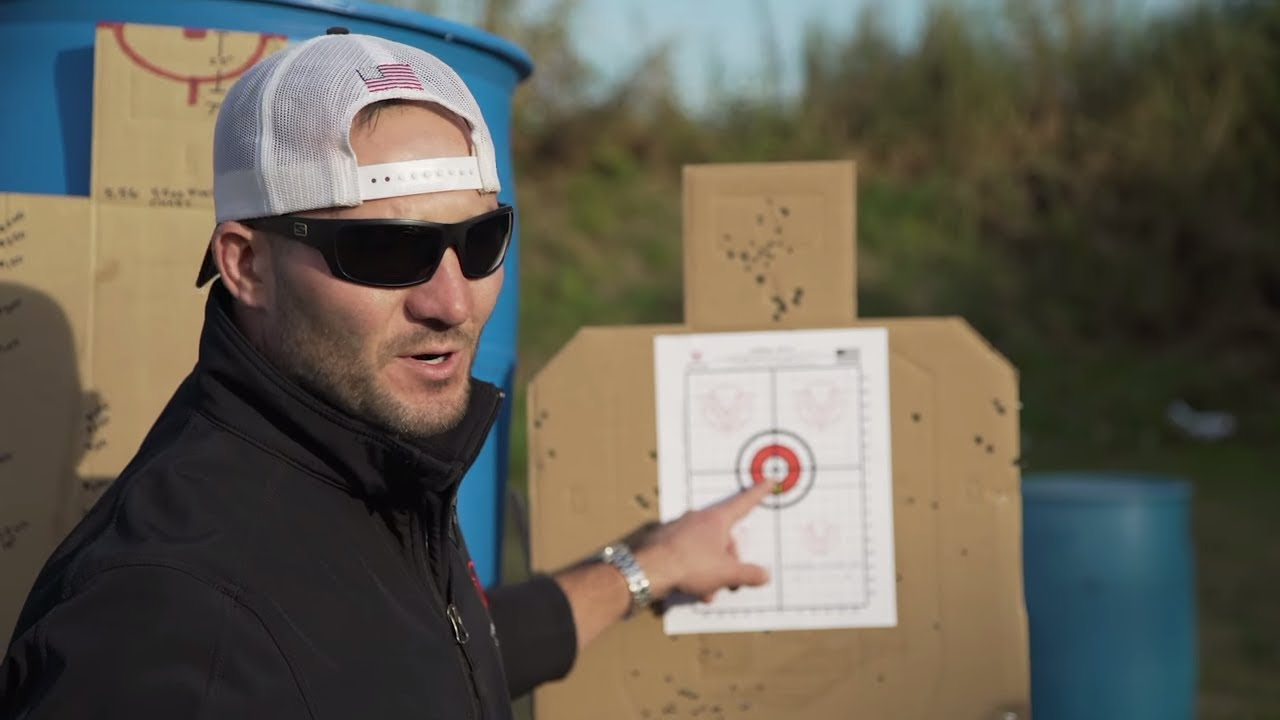
Vigilance Elite posted a video back in March 2018 about how he has been studying the variance in bullet drop based on zero distance. His conclusion in the video was that an unorthodox 36 yard zeroGlossary36 Yard ZeroA rifle zeroing approach where the sight is set at 36 yards to produce useful near and far intersections for practical holds. is the best middle ground for variable zeroing for 100, 200 and 300 yards.
More recently, Kotaboy32 Tactical released a video in August 2019 about the same 36 yard zeroGlossary36 Yard ZeroA rifle zeroing approach where the sight is set at 36 yards to produce useful near and far intersections for practical holds. that Vigilance Elite had expressed earlier. This video highlights how effective the zero was for his rifle setup (.223 65 grain on a 14″ barrel). In this video, Kotaboy32 shows video evidence of the zero working at 100 yards, 200 yards and 300 yards using just the dot optic.
There is not much to say here as both videos quite frankly do a better job at explaining the reason for the 36 yard zeroGlossary36 Yard ZeroA rifle zeroing approach where the sight is set at 36 yards to produce useful near and far intersections for practical holds. and the results of live testing for that zero. It is worth noting that although both videos dictate the usefulness of the zero, neither express that the zero is perfect. Hopefully we will see more future videos of the 36 yard zeroGlossary36 Yard ZeroA rifle zeroing approach where the sight is set at 36 yards to produce useful near and far intersections for practical holds. being tested in many calibres such as .308 and .22 cartridge sizes.
What do you think? Would you use the 36 yard zeroGlossary36 Yard ZeroA rifle zeroing approach where the sight is set at 36 yards to produce useful near and far intersections for practical holds. when using a dot optic? Do you think this form of zeroing would be useful in competitions or is it reserved for tactical use only? Do you think this will hold overGlossaryHold OverAiming above the desired impact point to compensate for bullet trajectory, sight offset, or distance. for other calibres?
Find out more from both the Vigilance Elite and Kotaboy32 Tactical Videos: